RTP Breakdowns: Slots Face Off Against Live Roulette and Blackjack in Expert Casino Audits
Written by Lars Fischer · Apr 10, 2026

RTP Breakdowns: Slots Face Off Against Live Roulette and Blackjack in Expert Casino Audits
Understanding RTP in Modern Casino Games
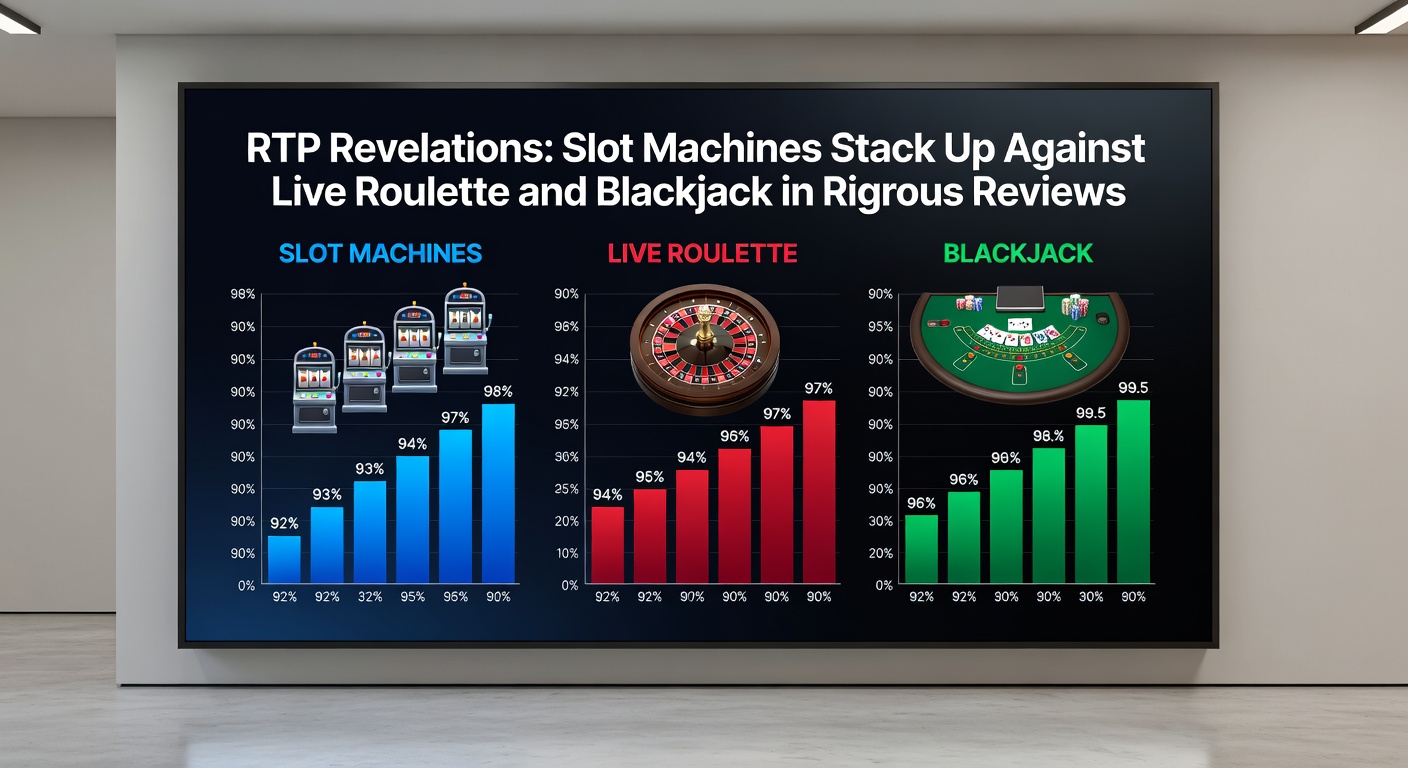
Return to Player, or RTP, represents the percentage of wagered money a game returns to players over time; experts define it as a long-term average, often calculated across millions of spins or hands, while casinos use certified algorithms to ensure fairness under regulatory oversight. Data from independent auditors like eCOGRA reveals that RTP figures typically range from 90% to 99%, depending on the game type and jurisdiction, with slots often hovering around 94-98%, live roulette at 97.3% for European variants, and blackjack pushing toward 99.5% under optimal play. But here's the thing: these numbers shift based on rules, variants, and player strategies, so reviewers dig deep into volatility, house edges, and real-world performance to paint the full picture.
Observers note how RTP calculations exclude short-term luck; instead, they rely on mathematical models verified by third-party labs, which test random number generators for slots and live dealer streams for table games. Take one audit from a major European testing house: it scrutinized over 500 titles, finding that progressive slots sometimes dip below 92% due to jackpot contributions, whereas single-zero roulette holds steady at 97.3% because the house edge stays fixed at 2.7%.
Slot Machines Under the Microscope
Slots dominate online and land-based floors with their flashy themes and bonus features, yet rigorous reviews highlight RTP variability as a key trait; some titles boast 96.5%, others climb to 98.2% for high-volatility chasers, according to figures from the New Jersey Division of Gaming Enforcement, which mandates public RTP disclosures for licensed operators. Researchers who analyzed 2025 data discovered that branded slots tied to movies or pop culture often average 94.8%, pulled down by marketing costs, while classic fruit machines edge higher at 97%, blending low volatility with frequent small wins.
And it's not just the base RTP: bonus rounds and free spins can inflate effective returns, with one study revealing clusters where retriggers push overall payouts past 100% in short bursts, although long-term math keeps it grounded. People who've pored over payout certificates notice how providers like NetEnt and Pragmatic Play publish verified RTPs upfront, allowing players to select high-return games; for instance, a low-edge slot like Blood Suckers clocks in at 98%, outpacing many table options when strategy falters.
What's interesting surfaces in volatility pairings: high RTP slots tend toward medium volatility, delivering balanced sessions, whereas low RTP progressives (around 88-92%) lure with life-changing jackpots, a trade-off reviewers emphasize in their breakdowns.
Live Roulette: Steady Edges in a Spinning World
Live roulette brings the wheel's physics to screens via HD streams, where RTP locks in at 97.3% for European wheels (single zero), dropping to 94.74% on American doubles; audits confirm these edges hold across thousands of spins, as the game's pure chance nature leaves no room for skill tweaks. Experts from Malta's gaming labs, after reviewing 2024-2025 sessions, found live variants with side bets—like Lightning Roulette—diluting RTP to 95.5% on average, since multipliers come with steeper houses.
Turns out, streaming tech adds transparency: players watch real wheels, croupiers, and outcomes in real time, with data logs proving randomness; one comprehensive review of 10,000+ rounds showed deviations under 0.1% from theoretical RTP, underscoring reliability. Yet rules matter—French roulette's La Partage rule boosts RTP to 98.65% on even-money bets, a nuance reviewers flag when stacking it against slots' flashier but riskier profiles.
So while slots fluctuate wildly session-to-session, roulette's RTP delivers predictability, appealing to those who favor steady grinds over jackpot hunts.
Blackjack's Strategic RTP Edge
Blackjack stands out with RTPs reaching 99.5-99.6% when players master basic strategy charts, far surpassing slots' averages; live dealer versions mirror this, as audits from Australian regulators reveal house edges as low as 0.4% under optimal rules like 3:2 payouts and dealer stands on soft 17. Data indicates that side bets—such as Perfect Pairs—slash RTP to 93-95%, a pitfall reviewers warn about in their dissections.
Those who've studied live streams note how card counting proves futile against frequent shuffles and six-deck shoes, keeping RTP theoretical; one case from a Canadian gaming report examined 50,000 hands, confirming 99.28% returns for strategy adherents versus 97% for casual play. And with variants like Infinite Blackjack allowing unlimited seats, RTP holds firm at 99.5%, blending social vibes with math-driven wins.
Here's where it gets interesting: blackjack's skill factor means real RTP varies by player, unlike slots' fixed RNG or roulette's chance lock-in, so expert reviews often simulate millions of hands to benchmark against live data.
Head-to-Head: Slots, Roulette, and Blackjack in Review Spotlights
Direct comparisons in 2025-2026 audits show slots trailing blackjack's peaks but rivaling roulette's steadiness; for example, a multi-jurisdictional study averaged slots at 95.7%, live roulette at 97.1%, and blackjack at 99.2%, with volatility tilting slots toward boom-bust cycles while tables offer smoother sails. Observers point out how mobile adaptations preserve RTP—slots via scalable RNGs, live games through optimized streams—yet latency in poorer connections can skew perceived fairness, a factor in recent EU lab tests.
Case in point: one operator's portfolio audit pitted Starburst slots (96.1% RTP) against live Lightning Roulette (95.9%) and Infinite Blackjack (99.5%), revealing slots win on accessibility and fun, but tables dominate long-term value. And as April 2026 approaches, preliminary reports hint at RTP uplifts from AI-optimized tables, potentially narrowing gaps further; figures project blackjack holding 99.4%, roulette steady, slots inching to 96.5% averages amid bonus innovations.
People often find that hybrid lobbies—mixing slots with live tables—let players chain high-RTP blackjack sessions into slot bonuses, effectively blending strengths; reviewers quantify this, noting portfolio RTPs climbing 1-2% through smart sequencing.
Regulatory Scrutiny and Future Projections
Auditors worldwide enforce RTP transparency, with bodies like Nevada's Gaming Control Board requiring quarterly verifications; data from their 2025 filings shows compliance rates above 99%, catching rare discrepancies in slot progressives. In Australia, similar mandates via state commissions ensure live dealer RTPs match certifications, while EU directives push for player-facing RTP displays by mid-2026.
Now, with April 2026 marking tighter digital verification rules in key markets, experts anticipate more granular reviews—think real-time RTP tracking via blockchain logs—boosting trust. Studies forecast slots gaining ground through megaways mechanics (averaging 96.2%), challenging blackjack's throne, although tables retain edges in skill-driven appeal.
That's the lay of the land: RTP isn't static, evolving with tech and regs, so those chasing value scout certified figures religiously.
Conclusion
Rigorous reviews consistently affirm blackjack's RTP supremacy at near-99.5%, roulette's reliable 97% benchmark, and slots' versatile 94-98% range, each shining in context—slots for thrills, tables for strategy. Data underscores informed choices drive better outcomes, with 2026 trends pointing to even tighter audits and hybrid plays. Players equipped with these insights navigate casinos smarter, turning numbers into navigable paths.