Tracing Transaction Paths Through Layered Incentives in App-Driven Roulette, Blackjack, and Reel Experiences
Written by Blake Bennett · Aug 10, 2026

Tracing Incentive Layers Across App-Driven Roulette, Blackjack, and Reel Experiences
Mobile applications now structure player incentives in sequences that begin with deposit matches, move through free spin allocations or table game credits, and conclude with withdrawal eligibility checks. These layers require operators to maintain detailed transaction logs that record each bonus activation, wager contribution, and balance adjustment. Data from payment processors indicate that the average user journey in such apps crosses between three and five distinct incentive stages before any funds become eligible for cashout. Operators assign specific contribution percentages to different games, with roulette bets often counting at 50 percent toward bonus wagering while blackjack hands contribute at 20 percent and reel spins reach 100 percent. Transaction monitoring systems flag deviations from these ratios in real time, which allows compliance teams to isolate accounts that attempt to circumvent the rules through rapid game switching. Reports published in August 2026 by the Nevada Gaming Control Board highlighted a 14 percent rise in flagged bonus abuse cases linked to multi-app usage across the first half of the year. Payment flows inside these platforms typically follow a fixed sequence: a user deposits via card or e-wallet, the deposit triggers an automatic bonus credit, the combined balance is locked until wagering thresholds are met, and only then does the system release funds for withdrawal. Each step generates immutable ledger entries that auditors later reconcile against player session data. Industry analysts note that the time between deposit and first withdrawal has lengthened from 48 hours in 2023 to an average of 72 hours in 2026, largely because verification routines now cross-reference game-type contribution data before approving any payout.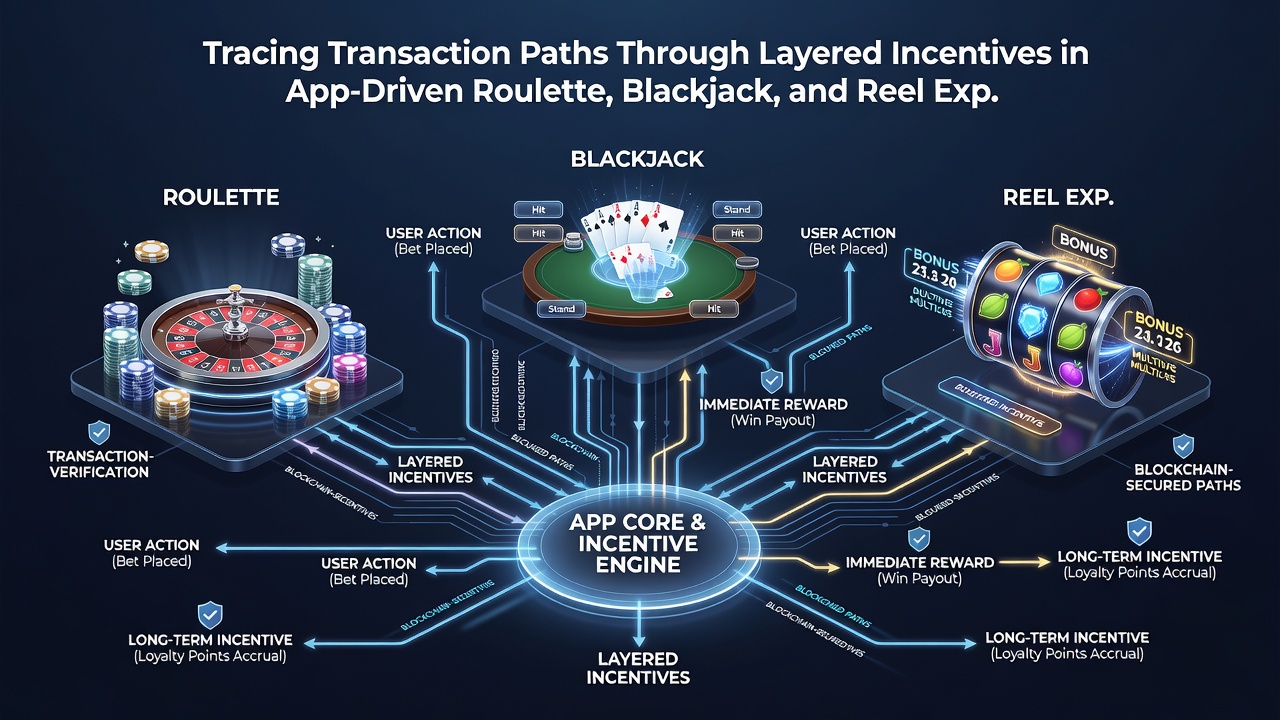 When players stack multiple promotions, such as a deposit bonus followed by a reload offer and a tournament entry credit, the application prioritizes the oldest incentive first. This FIFO approach ensures that expiration dates are enforced correctly and that transaction histories remain linear rather than branched. Regulatory filings from Australian state authorities show that linear tracking reduced the incidence of bonus stacking disputes by 22 percent between 2024 and 2026.
Mobile applications now structure player incentives in sequences that begin with deposit matches, move through free spin allocations or table game credits, and conclude with withdrawal eligibility checks. These layers require operators to maintain detailed transaction logs that record each bonus activation, wager contribution, and balance adjustment. Data from payment processors indicate that the average user journey in such apps crosses between three and five distinct incentive stages before any funds become eligible for cashout. Operators assign specific contribution percentages to different games, with roulette bets often counting at 50 percent toward bonus wagering while blackjack hands contribute at 20 percent and reel spins reach 100 percent. Transaction monitoring systems flag deviations from these ratios in real time, which allows compliance teams to isolate accounts that attempt to circumvent the rules through rapid game switching. Reports published in August 2026 by the Nevada Gaming Control Board highlighted a 14 percent rise in flagged bonus abuse cases linked to multi-app usage across the first half of the year. Payment flows inside these platforms typically follow a fixed sequence: a user deposits via card or e-wallet, the deposit triggers an automatic bonus credit, the combined balance is locked until wagering thresholds are met, and only then does the system release funds for withdrawal. Each step generates immutable ledger entries that auditors later reconcile against player session data. Industry analysts note that the time between deposit and first withdrawal has lengthened from 48 hours in 2023 to an average of 72 hours in 2026, largely because verification routines now cross-reference game-type contribution data before approving any payout.Payment Routing and Bonus Allocation Mechanics
Applications segment bonuses by game category so that a deposit match applies first to table games, after which any remaining balance unlocks reel-specific free spins. This ordering creates traceable paths because the software assigns unique identifiers to each incentive tranche. When a player moves from blackjack to roulette and then to slots, the system records the exact amount drawn from each tranche, which prevents double-counting of wagering progress. Observers at the Canadian Gaming Association have documented similar segmentation practices in licensed Ontario apps since regulatory updates took effect in early 2025. Transaction trails become more complex when cashback offers activate on net losses. The cashback amount is calculated nightly, credited as a non-withdrawable balance, and then converted to withdrawable funds only after additional playthrough conditions are satisfied. Auditors trace these conversions by matching timestamped loss reports with subsequent wager volumes, a process that relies on API connections between the game server and the payment gateway. One study released by the University of Nevada, Las Vegas gaming research unit found that 68 percent of disputed withdrawals in 2025 involved cashback balances that had not yet completed their required wagering cycle.Game-Specific Contribution Rules and Audit Trails
Roulette wheels accept bets on single numbers, columns, or colors, yet only non-zero bets typically count toward bonus requirements. Blackjack rules limit contribution to the initial wager plus any doubles or splits, excluding insurance bets entirely. Reel games count every spin at face value, which makes them the fastest route for completing wagering targets. Software dashboards display real-time progress bars that update after each round, giving players visibility while simultaneously logging the data for backend reconciliation.
When players stack multiple promotions, such as a deposit bonus followed by a reload offer and a tournament entry credit, the application prioritizes the oldest incentive first. This FIFO approach ensures that expiration dates are enforced correctly and that transaction histories remain linear rather than branched. Regulatory filings from Australian state authorities show that linear tracking reduced the incidence of bonus stacking disputes by 22 percent between 2024 and 2026.